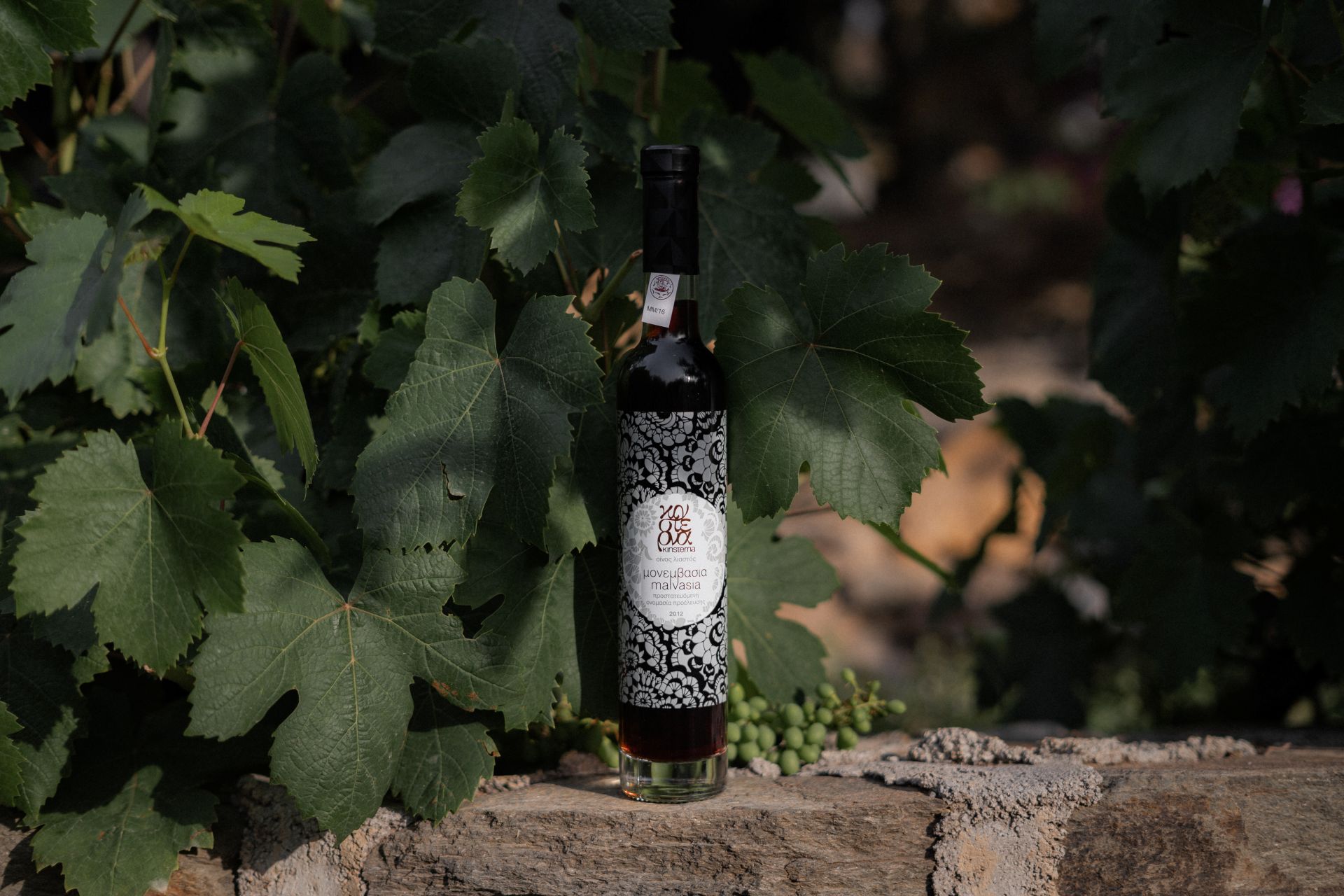

Long before modern sommeliers cataloged vintage years or regions gained official appellation status, single barrels of amber wine sailed out from a fortress port in the southern Peloponnese to conquer royal courts across Europe.
The story of Malvasia wine history is unlike that of any other vintage in the Mediterranean. It is not merely a tale of viticulture, but an epic of Byzantine emperors, Venetian merchant empires, and a golden nectar so valuable it was traded alongside silk and spices as liquid currency.
The Byzantine Roots of Monemvasia’s Golden Nectar
The origins of this legendary drink begin on the sea-bound limestone rock of Monemvasia and its fertile hinterland. Founded in the 6th century, the impenetrable fortress city quickly developed into a vital maritime hub, supported by surrounding agricultural estates like the historic grounds of Kinsterna Hotel, where vines and olives have been cultivated for centuries. Local winemakers in these coastal hills cultivated indigenous grape varieties, predominantly Monemvasia, Kydonitsa, and Assyrtiko, developing a distinct method to capture their natural sugars.
To produce this celebrated Byzantine wine in Greece, growers allowed the grapes to ripen fully on the vine before hand-harvesting and spreading them on straw mats to dry under the intense Mediterranean sun for days. This natural evaporation concentrated the sugars, aromas, and acidity. Once pressed and aged in wooden casks, the resulting sweet, amber-hued wine possessed an exceptional shelf life, making it uniquely suited for long journeys aboard medieval sailing ships without spoiling.
As Frankish and Venetian traders arrived at the fortress, they found the local Greek name Monemvasia difficult to pronounce. Over time, in the taverns and markets of Western Europe, the name morphed into Malvasia (and in English, Malmsey).
Liquid Gold: How Malvasia Conquered Medieval Europe
By the 13th and 14th centuries, Venetian merchants recognized the immense commercial potential of the Laconian nectar. Securing trade privileges from Byzantine emperors, Venice built a massive distribution network dedicated almost exclusively to exporting Malvasia across the known world.
The wine became an absolute status symbol among European aristocracy. Venetian taverns specializing in its sale were known simply as Magazzini del Malvasia, while royal courts from London to Paris paid exorbitant prices for single casks. The wine’s cultural footprint was so prominent that it earned immortal fame in English literature; in William Shakespeare’s Richard III, the Duke of Clarence is famously murdered by being drowned in a butt of Malmsey wine.
However, as the Ottoman Empire expanded into the Peloponnese during the 15th and 16th centuries, trade routes shifted and local production suffered. To meet the ongoing European demand, Venetian and Genoese traders took cuttings of the original vines and planted them across their colonies, including Crete, Madeira, the Canary Islands, and the Italian peninsula. While these international offspring thrived under the broad banner of Malvasia, the ancestral heartland of the wine gradually fell quiet for centuries.
The Modern Revival in the Monemvasia Wine Region
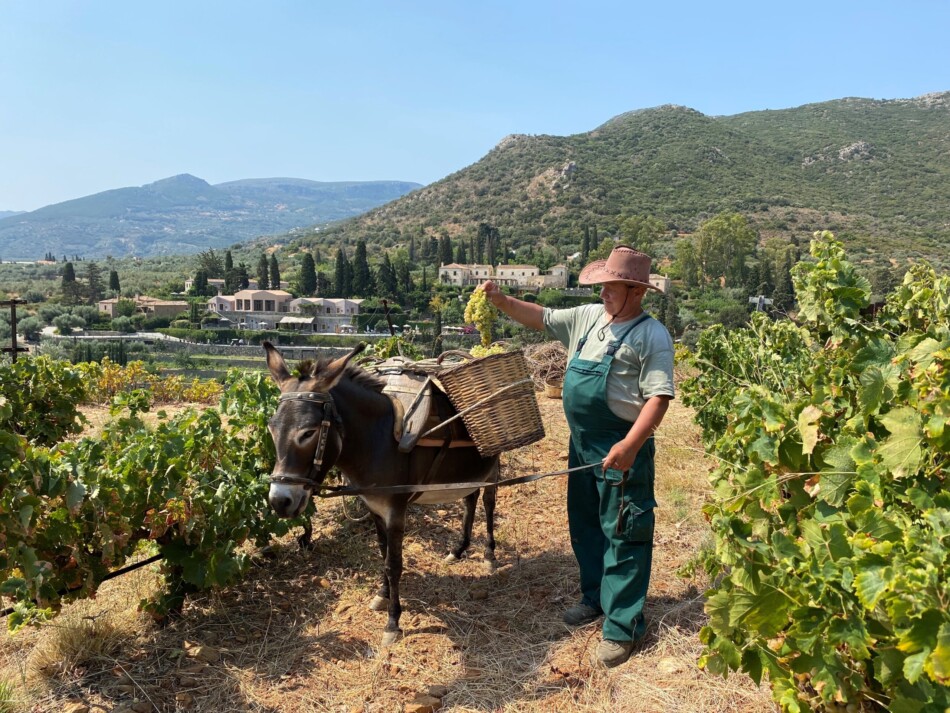
For generations, the true story of the original Laconian vintage lay dormant, kept alive only by local families who continued small-scale production for private consumption. That trajectory changed dramatically over recent decades as dedicated winemakers, historians, and viticulturists reunited to restore the indigenous grapes to their native soil.
Through rigorous genetic research and historical mapping, the unique microclimate of the Monemvasia wine region was formally recognized. This culminated in the granting of the official PDO Monemvasia-Malvasia designation (Protected Designation of Origin), requiring wines to be crafted from native grape varieties and processed using the traditional sun-drying methods of the past.
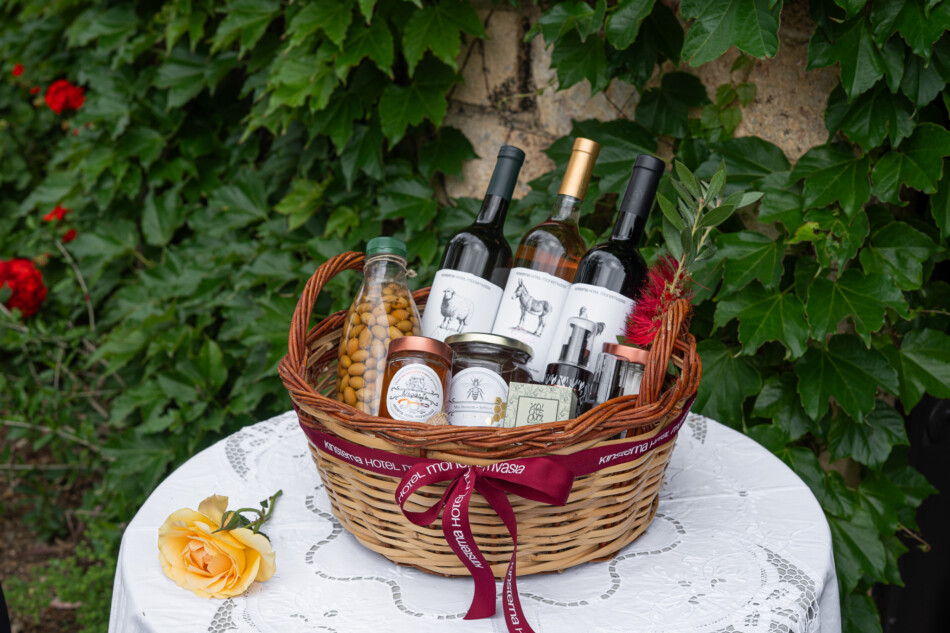
Kinsterna Hotel has actively contributed to bringing this legacy back to life by replanting indigenous grape varieties across its 25-acre estate, specifically in the historic Ambelakia area overlooking the sea. Guests can walk through our vineyards and olive groves to witness how ancient agriculture continues to flourish, or sample the estate’s own signature bottlings alongside regional harvests in our products collection.
Tasting History: The Profile of PDO Monemvasia-Malvasia
An authentic bottle of sun-dried Malvasia offers a sensory profile that bridges past and present. Pouring the golden elixir reveals a deep amber glow accented by polished copper and brilliant topaz reflections.
On the nose, it unfolds with layered complexity, yielding rich aromas of dried fig, honeyed apricot, and candied orange peel alongside warmer notes of toasted walnut, cinnamon, and clove. On the palate, a velvety, full-bodied sweetness is struck through by a vibrant streak of natural coastal acidity, ensuring a remarkably clean and elegant finish that never feels heavy.
How to Experience Malvasia Today
To fully appreciate the depth of this historical vintage, it is best treated with the quiet respect of a fine digestif or a deliberate dessert pairing. Serving the wine lightly chilled between 10°C and 12°C allows its bright acidity and aromatic bouquet to open up completely.
At the table, it pairs exceptionally well with contrasting flavors, standing up beautifully to sharp blue cheeses, aged Laconian graviera, toasted nuts, dry fruit tarts, or rich dark chocolate. For travelers exploring the Peloponnese, participating in a curated wine tasting experience within Kinsterna’s atmospheric stone wine cellar offers a rare chance to sample these regional vintages while learning about the centuries of craftsmanship sealed inside every bottle.