
As late autumn settles across the Laconian landscape, a quiet shift takes place across the countryside. Broad burlap nets are laid across the dark earth beneath silver-leafed groves, long wooden poles strike the high branches, and the crisp morning air fills with the peppery scent of newly pressed oil. The olive harvest in Greece, known locally as the mazema, is an essential autumn routine that brings families and estate workers into the groves from dawn until dusk to gather the year’s crop.
On historic Laconian grounds like Kinsterna Hotel, this seasonal ritual is treated not as a forgotten relic, but as an active, living tradition. Serving as a guardian of regional agrarian practices, the estate preserves centuries of land stewardship, cultivating ancient olive groves that have supplied Laconian tables for generations.
When and How the Greek Olive Harvest Happens
The timing of the harvest is dictated entirely by the condition of the fruit and the intended character of the oil. Beginning in late October and extending through January, the traditional Greek harvest moves systematically across the Peloponnese:
The Early Harvest (Agourelaio): In late October and early November, green, unripened olives are hand-picked to produce agourelaio (early harvest extra virgin olive oil). Prized for its deep emerald color, high polyphenol count, and sharp peppery finish, this oil is gathered in smaller, carefully measured quantities.
The Main Harvest: As winter approaches, the remaining olives mature to deep purple and black, yielding a golden, well-balanced oil with a smooth, fruit-forward flavor.
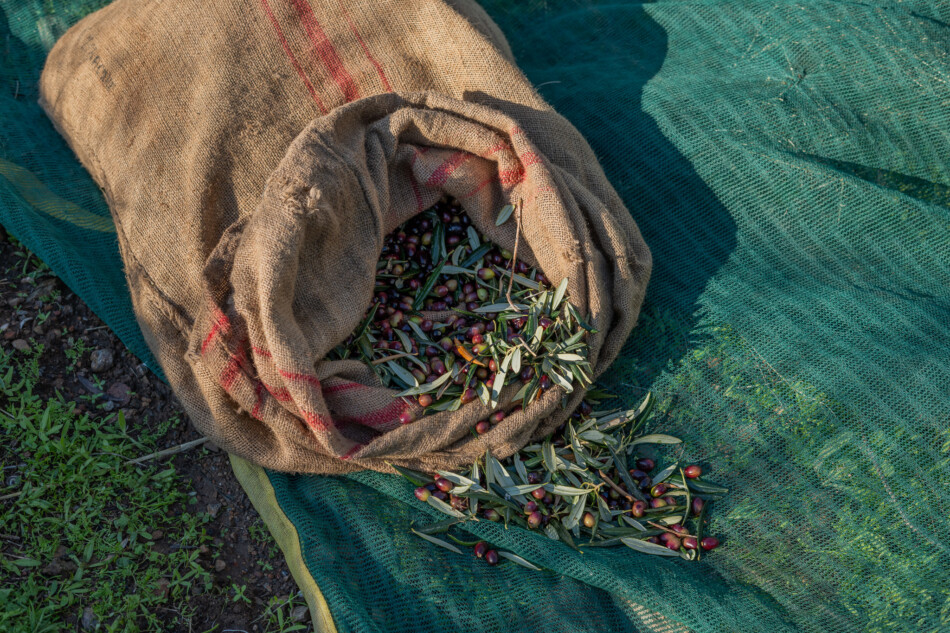
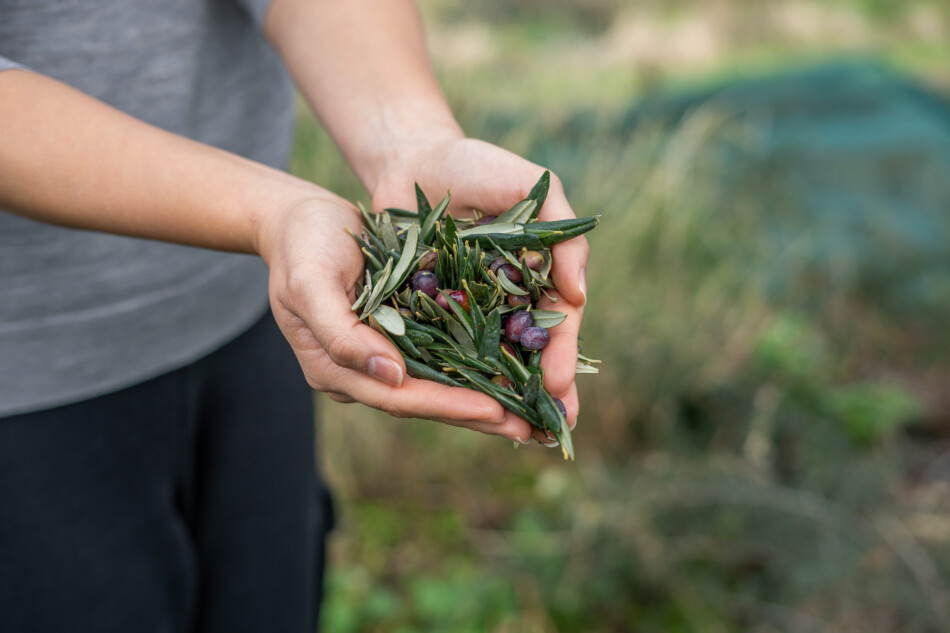
The harvesting work itself remains largely unchanged. Workers use wooden poles or light hand rakes to loosen the fruit onto broad nets laid out underneath the trees. The gathered olives are collected into woven baskets or heavy burlap sacks and transported directly to the mill within hours. Swift cold-pressing is a fundamental step in olive oil production, maintaining low acidity and protecting the delicate aromas of fruit and fresh grass.
From Grove to Mill: The Estate’s Olive Oil Heritage
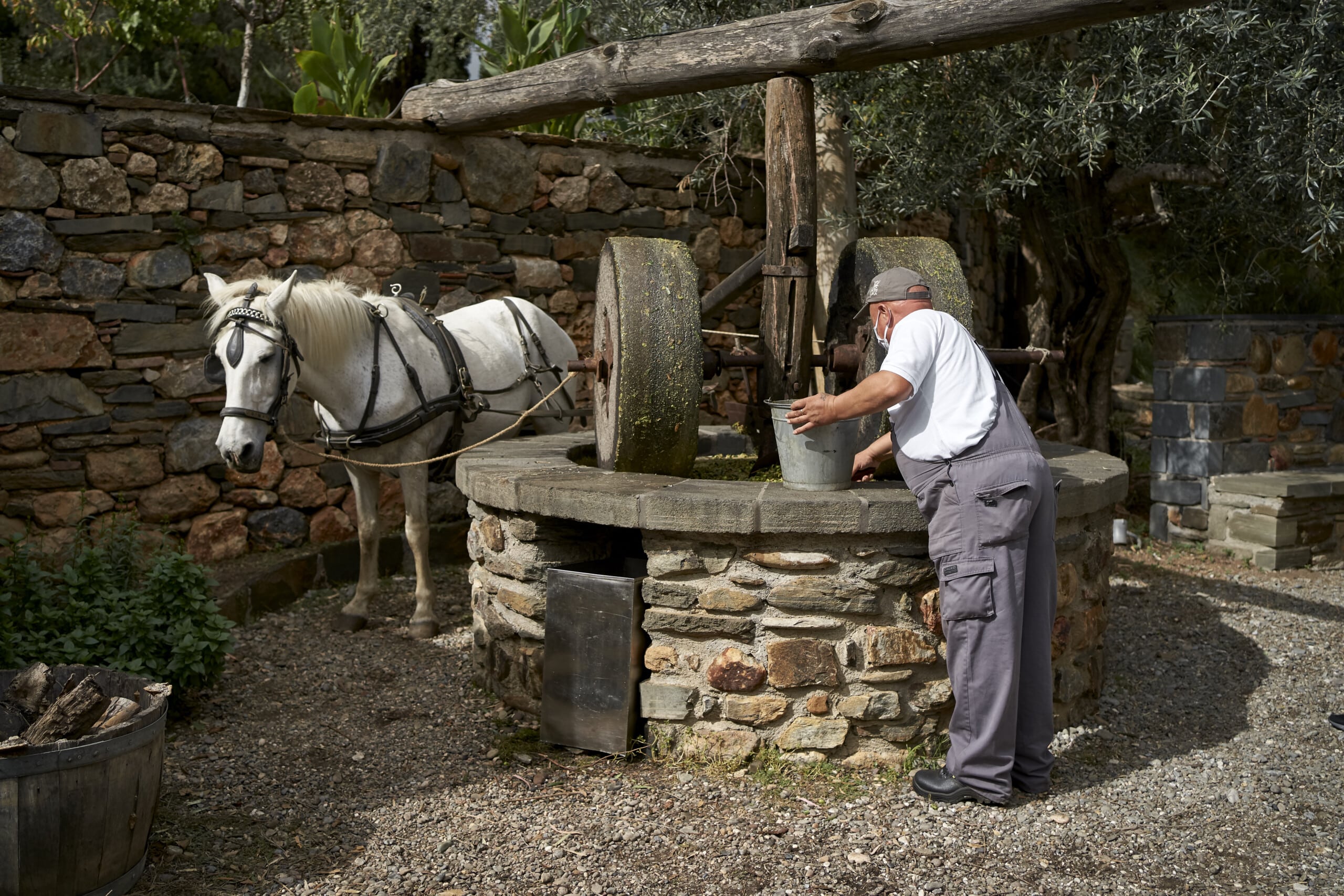
Once the olives are gathered from the trees, the second chapter of the harvest begins. Historically, Laconian estates relied on heavy, animal-driven stone mills to crush the whole fruit, skin, flesh, and pit, into a thick paste before layering it onto woven mats to extract the oil under heavy pressure.
At Kinsterna Hotel, this milling heritage remains physically woven into the architecture. The estate preserves its traditional stone olive oil press, standing beside the historic wine press (lino) where generations of estate workers once processed the autumn yield. Today, while modern cold-pressing techniques ensure the highest quality standards, low acidity, and optimal preservation of antioxidants for our products collection, visitors can explore our vineyards and olive groves to see where this long agrarian legacy continues to thrive across the 50-acre grounds.
From Vine to Grove: The Peloponnese Harvest Season
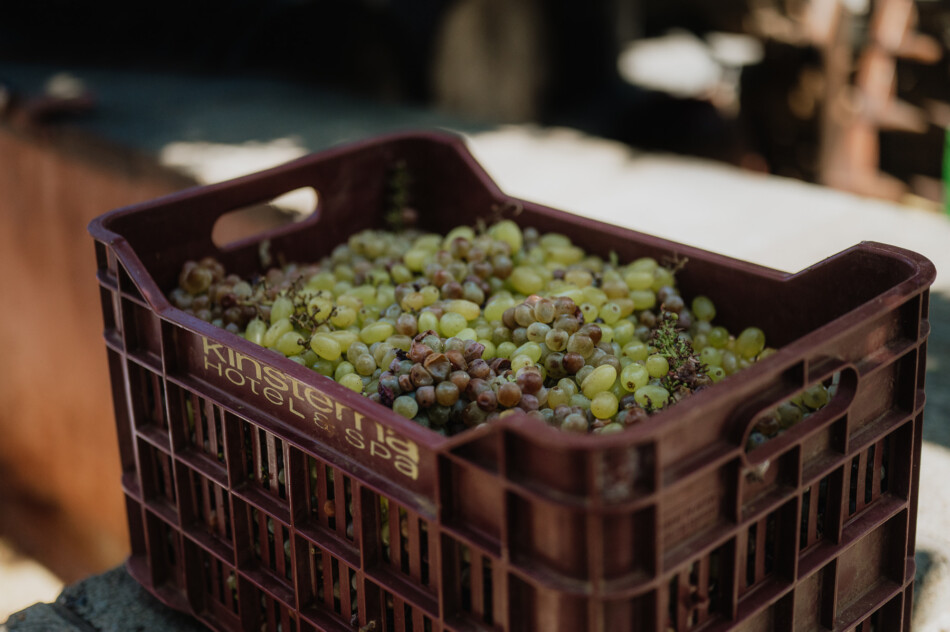
The olive gathering does not happen in isolation. In the southern Peloponnese, it follows directly on the heels of the late summer grape harvest in Greece.
Historically, self-sufficient Laconian estates operated around this continuous agricultural rhythm. Workers first gathered native grape varieties across the vineyards of the Peloponnese to press signature wines and distill local spirits. As the wine settled in the cellars, attention turned immediately to the ancient olive groves. This steady progression from vine to grove ensured that every autumn provided both vintage wine and fresh oil for the estate pantry.
Experiencing the Harvest at a Historic Laconian Estate
For travelers visiting Laconia during the autumn months, the harvest offers an honest glimpse into rural life. At historic properties like Kinsterna Hotel, guests can observe or participate in this seasonal routine alongside estate staff.
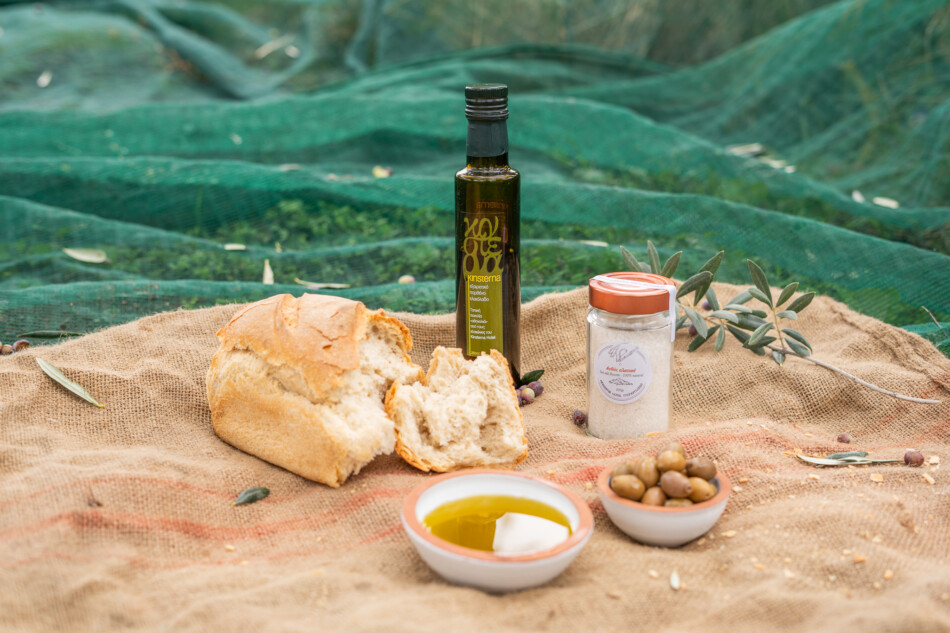
Visitors can walk the groves with the harvest hands, follow the fruit to the pressing area, and taste the unfiltered extra virgin olive oil while it is still cloudy and vibrant. Paired simply with warm country bread baked daily at Linos Tavern, the fresh oil offers a direct taste of the Laconian soil. The estate completes this agricultural loop by returning leaf trimmings and organic press waste back to the soil as compost.
Olive Oil Experiences & Laconian Flavors
The olive harvest follows the rhythm of the land, tied to the season of late autumn and early winter months, as part of Kinsterna’s broader seasonal farm activities. However, exploring the estate’s liquid gold and agrarian heritage is an immersion available to guests year-round.
Even outside the harvest window, visitors can participate in guided extra virgin olive oil tastings across all four seasons. These structured tastings guide guests through the nuanced profiles of regional olive varieties, highlighting the grassy aromas, fruitiness, and signature peppery finish of high-quality Laconian oil.
Beyond olive oil, the estate offers a complete suite of immersive Laconian Flavours designed to connect travelers with regional food traditions. Guests can learn the art of traditional country bread baking in wood-fired stone ovens, join hands-on cooking workshops using ingredients harvested directly from the estate gardens, or sample wines and honey harvested from our own beehives, all of which reflect the authentic taste of the Peloponnese.
Tips for Harvest Season in Greece
Observing or taking part in the harvest requires simple preparation and an appreciation for countryside routines:
Practical Footwear and Layers: Autumn mornings in Laconia are cool and damp. Sturdy boots and comfortable layers make walking across uneven grove soil much easier.
Mind the Daylight Hours: Autumn days in the Peloponnese are shorter, and work in the groves typically begins early and wraps up by mid-afternoon. Planning farm walks or harvest participation for the morning ensures you catch the best light and the most active hours in the fields.
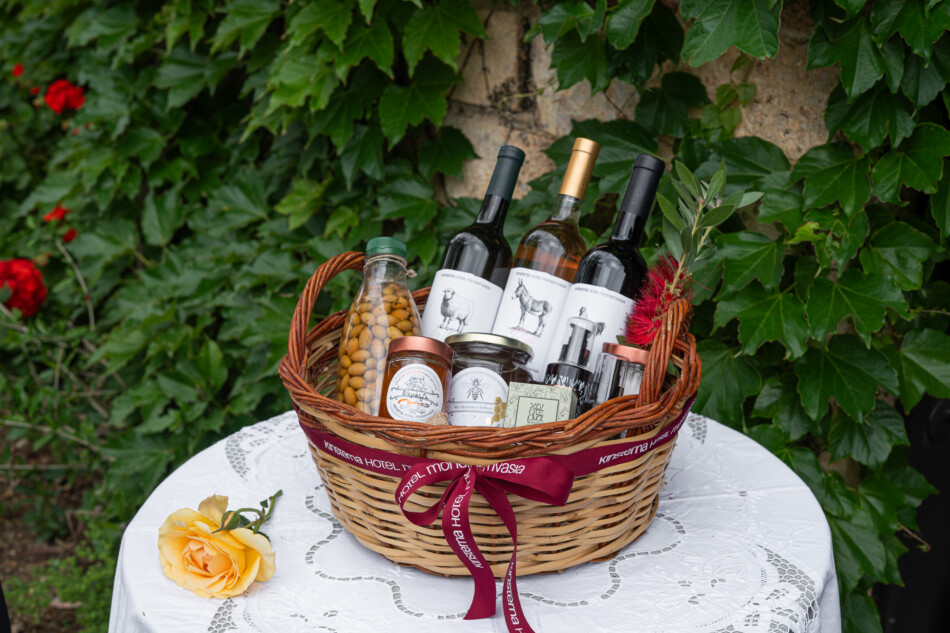
Taking the Harvest Home: Extra virgin olive oil and cured estate olives travel exceptionally well, making for thoughtful culinary souvenirs that bring Laconian tradition back to your home kitchen.